
Samsung single game in the world
VR is still a relatively young medium, and while plenty of games had already showed off its exciting potential, none of them had actually harnessed it so completely before Half-Life: Alyx. https://shazam-casino-login.com/ It raised the bar to astronomical heights – for what a VR campaign could look like, what VR shooting could feel like, and how a VR story could move you. Part of its strength comes from how completely it embraced that medium, pushing the player to investigate every corner and crevice in a way traditional 2D games simply can’t. But while that masterful design unequivocally positions it as the best VR game ever game, its incredible world, story, and encounters (and the way they set the stage for the future of Half-Life) make it a truly impressive FPS regardless of platform. – Tom Marks (Read Our Review)
Supergiant has released a string of incredible action games since its foundation, but Hades is all at once its best game, one of the finest takes on and best introductions to the roguelike genre, and a fresh, vibrant, and beautiful take on Greek mythology. As the son of the titular Hades, Zagreus, you’ll try escaping the underworld again and again and again, and Hades makes that Sisyphean task constantly rewarding (and not just because Sisyphus is actually a character). Hades places as much an emphasis on the wide array of powers you earn every run, which allows for so much variety in how you approach a run, as it does on permanent progression, either in unlocking weapons, overarching stats, and more. But it doubles down on those rewards, with new bits of story, character development, and lore being just as important to every death and rebirth as the mechanical knowledge and upgrades you unlock. That’s bolstered by a suite of incredible voice performances, fun twists on Greek myth, and a fantastic soundtrack that makes each attempt at breaking free memorable. – Jonathon Dornbush (Read Our Review)
Mario’s move out of arcades and into the Mushroom Kingdom changed our hobby and our industry as we know it, setting off a chain of events that shaped gaming as we know it today. Super Mario Bros. has been re-released many times, but there’s no such thing as too many times because it’s still fun and it’s still some kid’s first time ever playing a game. Its influence cannot be overstated. Example: literally everyone reading this can hum its theme song, right now, from memory. See? Now it’s playing in your head again. You’re welcome. – Ryan McCaffrey
It wasn’t until Snake covertly slithered his way onto the PlayStation that Metal Gear cemented itself as a big deal. The moment-to-moment gameplay was about being sneaky, and players were rewarded for outsmarting the defenses of Shadow Moses quietly and cleverly, but things frequently got loud during iconic boss fights and over-the-top action setpieces. However, where Metal Gear Solid was truly groundbreaking was its emphasis on narrative and cinematic presentation. Hideo Kojima’s love of Hollywood action movies was readily apparent through slick cutscenes, Yoji Shinkawa’s character and mechanical designs added a heavy dose of anime sensibility, and the whole experience sounded amazing thanks to the musical contributions of Harry Gregson Williams and a stellar voice cast. Metal Gear Solid looked like a movie, sounded like a movie, and felt like a movie, but still played like a video game, striking a delicate balance that the medium is still striving for over twenty years later. – Max Scoville (Read Our Review)
Sam Fisher’s third adventure is actually three masterpiece games in one. In the campaign, a stunning real-time lighting engine and open mission design allows you to play in countless different ways: total stealth, full gunplay, or a gadget-fest. Game 2 is the four-mission two-player co-op campaign, in which two young agents work together in a side story that runs parallel to Fisher’s adventure. You literally have to play together, from boosting each other up to high ledges to going back-to-back to scale elevator shafts, the co-op mode committed to cooperation in a way no other action game had. And then you had Spies vs. Mercs, which took the asymmetrical multiplayer mode introduced in Pandora Tomorrow and refined it into something truly unique in the gaming world. Agile, non-lethal spies playing in third-person view faced off against slow-moving but heavily armed mercs that saw the game through a first-person helmet. It was tense, riveting, and brilliant. – Ryan McCaffrey (Read Our Review)
Where in the world is carmen sandiego game
Where in the World Is Carmen Sandiego? is an educational video game released by Broderbund on April 23, 1985. It is the first product in the Carmen Sandiego franchise. The game was distributed with The World Almanac and Book of Facts, published by Pharos Books. An enhanced version of the game was released in 1989, which did not have the almanac-based copy protection and instead used disk-based copy protection. A deluxe version was released in 1990, and featured additional animation and a reworked interface from the original version. Some of the bonus features included digitized photos from National Geographic, over 3200 clues, music from the Smithsonian/Folkways Recordings, 20 villains, 60 countries, and 16 maps. CD-ROM versions for MS-DOS and Mac were released in 1992. A Windows version was released in 1994.
In the world of educational games, few titles are as iconic as Where in the World Is Carmen Sandiego? Released in 1985 by Broderbund Software, this classic became a cultural phenomenon and a staple in classrooms around the world. Not only did it teach kids about geography and culture, but it also turned learning into a thrilling detective adventure! If you’ve ever wondered how this game captivated generations, read on to explore the origins, gameplay mechanics, and legacy of Carmen Sandiego.
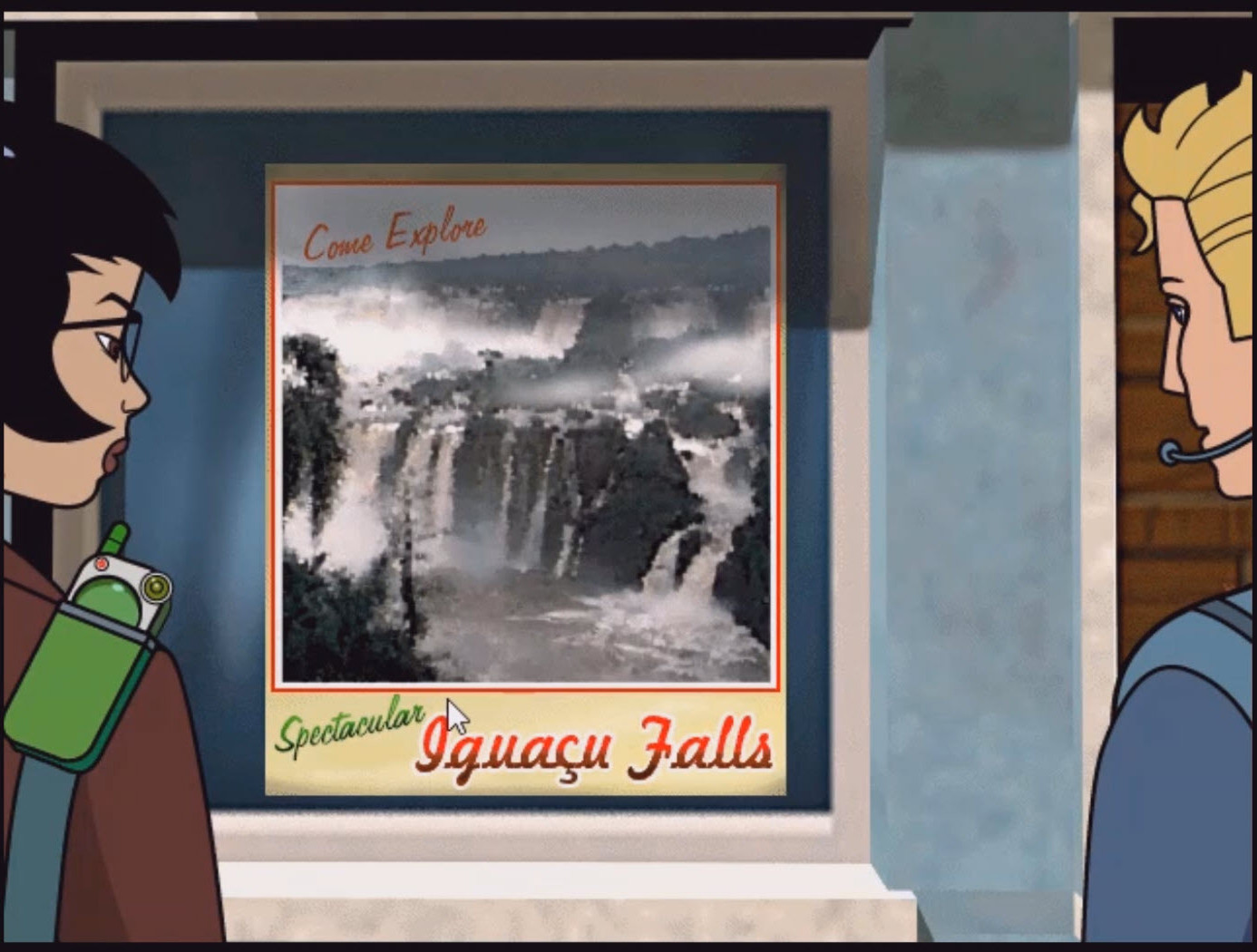
Where in the World Is Carmen Sandiego? is an educational video game released by Broderbund on April 23, 1985. It is the first product in the Carmen Sandiego franchise. The game was distributed with The World Almanac and Book of Facts, published by Pharos Books. An enhanced version of the game was released in 1989, which did not have the almanac-based copy protection and instead used disk-based copy protection. A deluxe version was released in 1990, and featured additional animation and a reworked interface from the original version. Some of the bonus features included digitized photos from National Geographic, over 3200 clues, music from the Smithsonian/Folkways Recordings, 20 villains, 60 countries, and 16 maps. CD-ROM versions for MS-DOS and Mac were released in 1992. A Windows version was released in 1994.
In the world of educational games, few titles are as iconic as Where in the World Is Carmen Sandiego? Released in 1985 by Broderbund Software, this classic became a cultural phenomenon and a staple in classrooms around the world. Not only did it teach kids about geography and culture, but it also turned learning into a thrilling detective adventure! If you’ve ever wondered how this game captivated generations, read on to explore the origins, gameplay mechanics, and legacy of Carmen Sandiego.
In the game Carmen Sandiego has invented a machine called the Babble-On Machine, and the user, playing the role of Agent 13, has to thwart her plans and free all the other agents that have been captured by Carmen.
Compute! called Carmen Sandiego an example of Broderbund’s «attention to detail», and added «that it helps teach research skills and fundamentals of geography as well seems almost too good to be true … it’s entertaining enough to disguise the fact that you might be learning something while you play». The magazine gave it the 1989 Compute! Choice Award for Educational Software, stating that it successfully combined teaching and fun. Info gave the Commodore 64 version four-plus stars out of five, describing it as «a really good educational game … you’ll hardly be aware that you’ve been taught. The graphics and gameplay are nice, too».
Japan world cup game
The second bid is from Egypt. Its Sports and Youth Minister Ashraf Sobhy said that Egypt has considered a bid to host the 2034 FIFA World Cup. Such a bid should be prepared by the national football association rather than the country. This bid was abandoned when Morocco was announced to cohost the 2030 World Cup.
On 12 September 2018, Prime Minister of Spain Pedro Sánchez discussed the possibility for Spain to bid with FIFA President Gianni Infantino and Royal Spanish Football Federation President Luis Rubiales. On 8 June 2019, Spain and Portugal expressed interest in co-hosting the 2030 FIFA World Cup.
Without any nations withdrawing their bids, the FIFA Congress convened in Berlin, Germany on 13 August 1936 to decide the next host. Electing France took only one ballot, as France had more than half of the votes in the first round.
The second bid is from Egypt. Its Sports and Youth Minister Ashraf Sobhy said that Egypt has considered a bid to host the 2034 FIFA World Cup. Such a bid should be prepared by the national football association rather than the country. This bid was abandoned when Morocco was announced to cohost the 2030 World Cup.
On 12 September 2018, Prime Minister of Spain Pedro Sánchez discussed the possibility for Spain to bid with FIFA President Gianni Infantino and Royal Spanish Football Federation President Luis Rubiales. On 8 June 2019, Spain and Portugal expressed interest in co-hosting the 2030 FIFA World Cup.
Without any nations withdrawing their bids, the FIFA Congress convened in Berlin, Germany on 13 August 1936 to decide the next host. Electing France took only one ballot, as France had more than half of the votes in the first round.