
Cryptocurrency
According to Alan Feuer of The New York Times, libertarians and anarcho-capitalists were attracted to the philosophical idea behind bitcoin. Early bitcoin supporter Roger Ver said: «At first, almost everyone who got involved did so for philosophical reasons. https://empireofthesunofficialmerch.com/ We saw bitcoin as a great idea, as a way to separate money from the state.» Economist Paul Krugman argues that cryptocurrencies like bitcoin are «something of a cult» based in «paranoid fantasies» of government power.
Non-fungible tokens (NFTs) are digital assets that represent art, collectibles, gaming, etc. Like crypto, their data is stored on the blockchain. NFTs are bought and traded using cryptocurrency. The Ethereum blockchain was the first place where NFTs were implemented, but now many other blockchains have created their own versions of NFTs.
The Department of the Treasury, on 20 May 2021, announced that it would require any transfer worth $10,000 or more to be reported to the Internal Revenue Service since cryptocurrency already posed a problem where illegal activity like tax evasion was facilitated broadly. This release from the IRS was a part of efforts to promote better compliance and consider more severe penalties for tax evaders.
Cryptocurrency wallet
As a newcomer in this field, the introduction of blockchain technology has had a profound and transformative impact on my life. It has opened up an entirely new realm of possibilities that I am eager to explore.
As a newcomer in this field, the introduction of blockchain technology has had a profound and transformative impact on my life. It has opened up an entirely new realm of possibilities that I am eager to explore.
In contrast to simple cryptocurrency wallets requiring just one party to sign a transaction, multi-sig wallets require multiple parties to sign a transaction. Multisignature wallets are designed for increased security. Usually, a multisignature algorithm produces a joint signature that is more compact than a collection of distinct signatures from all users.
Sending and receiving cryptocurrency is very easy using these applications. You can send or receive cryptocurrency from your wallet using various methods. Typically, you enter the recipient’s wallet address, choose an amount to send, sign the transaction using your private key, add an amount to pay the transaction fee, and send it.
Most web-based crypto wallets, also known as hosted wallets, tend to be custodial wallets. Typically offered on cryptocurrency exchanges, these wallets are known for their convenience and ease of usage, and are especially popular with newcomers, as well as experienced day traders.
Hardware wallets store your private keys offline, giving you full control and enhanced security. Even if you misplace or lose your hardware wallet, you can get a new one and use your Secret Recovery Phrase to access your assets.
How to buy cryptocurrency
Traditional trading platforms, however, take care of most of the security process for you. This often means investors only need to keep track of one password and one account, instead of keeping track of complex private keys. Those who don’t have the time to learn crypto cybersecurity may find this route more manageable.
It’s up to individual investors how much bitcoin they should buy. It is important to consider how much of your portfolio you want to allocate to a particular asset or asset class, as well as remembering to never invest more than you can afford to lose. Crypto is a particularly risky asset class, so bear this in mind when deciding how much bitcoin to purchase.
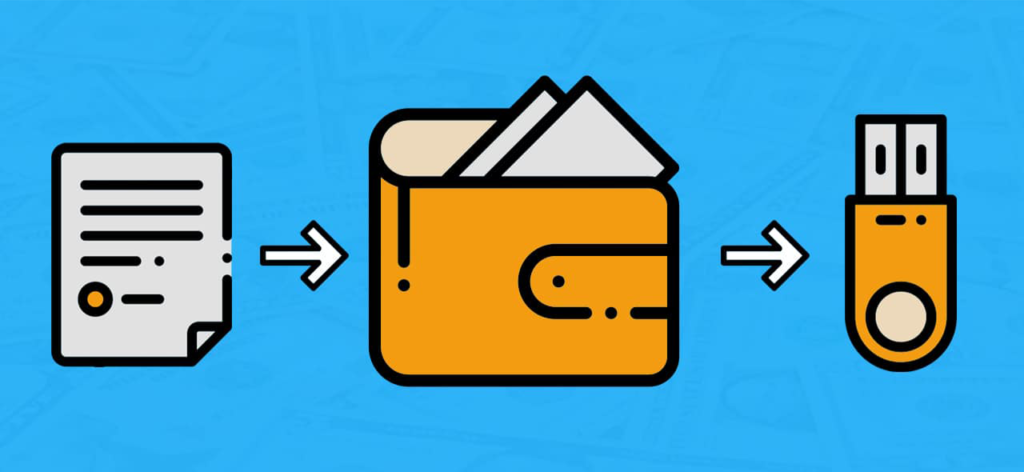
Tip: Crypto wallets do not technically store your cryptoassets. Instead, the assets themselves remain on the blockchain and are only accessible using a digital, private key, which is stored in the wallet.
Buying crypto is legal in most countries across the world. Be sure to check with your local laws and regulations before buying cryptocurrency. BitPay offers a safe and secure way to buy, store, swap and spend crypto. Unlike wallets offered by many popular exchanges, the BitPay Wallet is a non-custodial crypto wallet. This means that you, and only you, have control over your crypto. Be sure to make a record of your private keys and to not share them with anyone.
How to create cryptocurrency
Distributed ledgers, which help cryptocurrencies operate, are built on consensus algorithms that regulate the addition of new blocks to the blockchain. Essentially, all network participants have to accept a block for it to register. Thus, these mechanisms serve as a way to confirm transactions that take place on the blockchain without involving a third party.
Once you’ve selected a blockchain, the nodes that work in the blockchain must be created. Nodes are, usually, fast computers that connect to a blockchain network to verify and process transactions. Nodes keep the currency running while recording and sharing the data that eventually gets added to the digital ledger.
There are some risks associated with creating your own crypto coin. For example, there are regulatory risks. Organizations can address this by working with legal experts to ensure cryptocurrency compliance. Additionally, cryptocurrency can be vulnerable to cyberattacks. That’s why it’s important to work with cybersecurity experts to rigorously test and assess the product first.
A smart contract will have a significant impact on your project. Smart contracts are like traditional contracts, except for the fact that they are digital, operate on the blockchain, have pre-established rules, cannot be changed, and are executed automatically. You can create your own rules representing the main idea behind ICO/STO.
The last step before your token is deployed to the network is to confirm the transaction in your wallet and pay the respective fees. Click “Confirm” and it will take a few seconds until your token is created: